A/N: this review contains spoilers. Continue at your own risk.
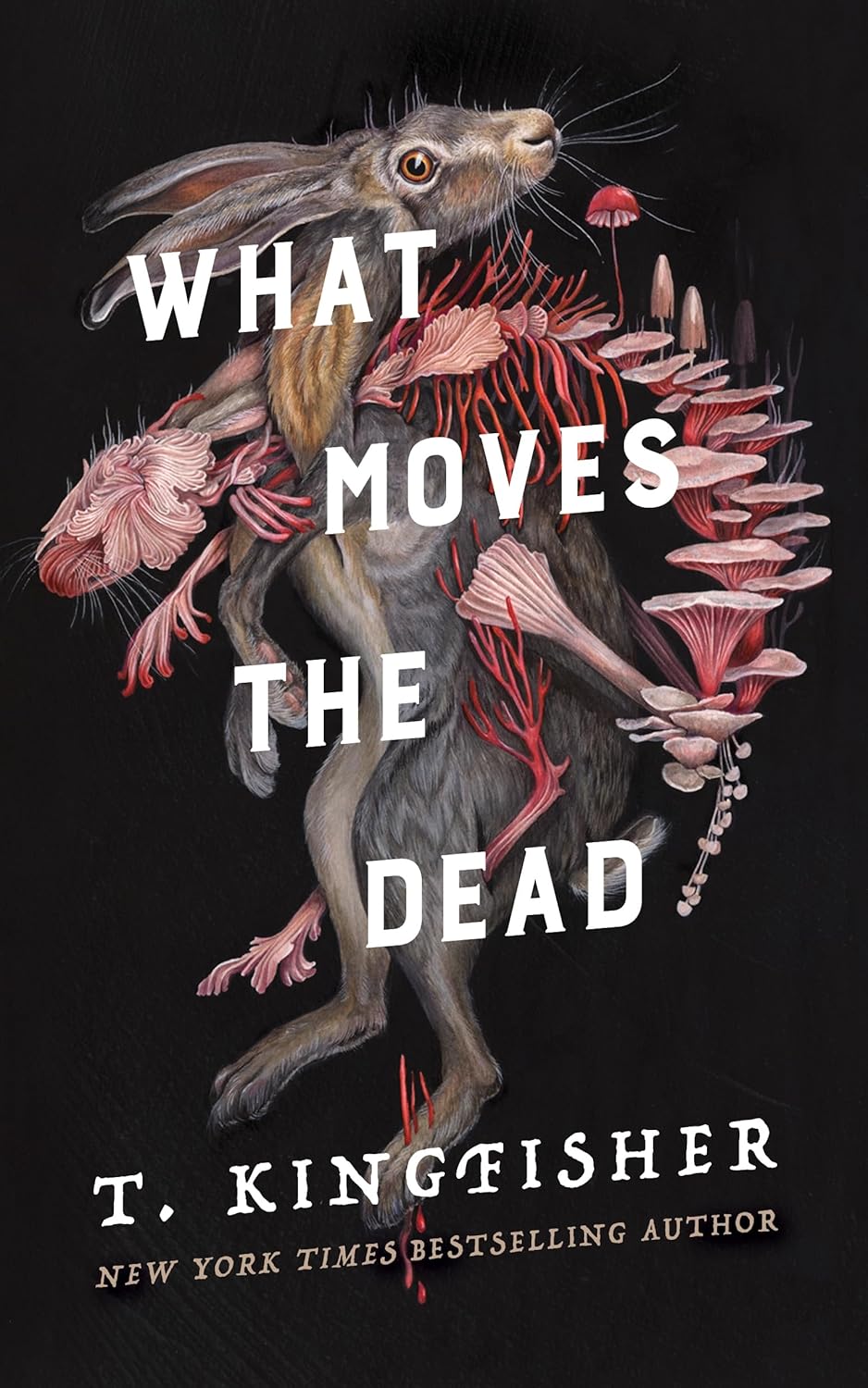
When Alex Easton, a retired soldier, receives word that their childhood friend Madeline Usher is dying, they race to the ancestral home of the Ushers in the remote countryside of Ruritania.
What they find there is a nightmare of fungal growths and possessed wildlife, surrounding a dark, pulsing lake. Madeline sleepwalks and speaks in strange voices at night, and her brother Roderick is consumed with a mysterious malady of the nerves.
Aided by a redoubtable British mycologist and a baffled American doctor, Alex must unravel the secret of the House of Usher before it consumes them all.
What Moves the Dead is another book that has long been on my TBR but I ended up reading because it was a book club book. I knew next to nothing about it except that it was a retelling of The Fall of the House of Usher, one of my favorite Poe stories.
First of all, I have to say that Kingfisher is without a doubt an incredible writer when it comes to descriptions, especially visceral body horror types of descriptions. I genuinely felt like I was in the story, trying to determine what was going on alongside Easton. I will admit that I figured out the ending pretty early on in the story – within the first couple of pages. There were a few tells about the book plus there are other stories that have a similar premise (mentioned in the Author’s note at the end of the novel for anyone interested – I don’t want to give away spoilers). But I still enjoyed the story nevertheless; especially with regard to the descriptions. She definitely did Poe justice and I, for one, believe he would enjoy what she did with the bones of his story.
I really enjoyed the additions to the story that Kingfisher made regarding the character of Alex Easton and kan (for those that don’t know, this is Easton’s appropriate pronoun for their caste as a sworn soldier) backstory. Considering the Poe original left the narrator nameless and essentially historyless, it was a very beneficial change that made me care even more about the character and what happened. Furthermore, Easton had an interesting characterization and sense of humor that really gave some extra nuance and a lightness to this otherwise dark tale.
My only grievance is that the whole fungi meets Fall of the House of Usher tale had been done already, just a couple years prior to this book’s publication. Granted, according to the author’s note, Kingfisher wasn’t aware of this when she began writing What Moves the Dead and only discovered the other book (which I shall leave nameless as it would otherwise spoil the story – email me or message me on Instagram if you must know the title) long after she had begun writing. Regardless, the other book’s existence took the wind out of Kingfisher’s sails in a way – especially since I was able to guess the two big reveals within the first two pages. I hold no animosity toward the book however as I trust Kingfisher that it was a coincidence. As a writer myself, I feel for her. Still, her story has some major distinct properties that do differentiate it enough from the nameless book that I was still able to greatly enjoy it.
Anyone who enjoys Poe, horror, and exceptional body-horror descriptions will likely find this book right up their alley.


Leave a Reply